

Fructose is a simple sugar found naturally in many fruits, vegetables, and honey. It is often added to processed foods as high-fructose corn syrup. While most people can digest fructose without issues, some individuals suffer from fructose malabsorption (also known as dietary fructose intolerance). This condition can cause uncomfortable digestive symptoms, including bloating, gas, abdominal pain, and diarrhea, significantly impacting quality of life.
What is Fructose Malabsorption?
Fructose malabsorption occurs when the small intestine is unable to absorb fructose efficiently. In a healthy digestive system, fructose is absorbed through the cells lining the small intestine and then transported into the bloodstream. However, in individuals with fructose malabsorption, this process is impaired. As a result, undigested fructose travels into the large intestine, where it ferments and produces gases like hydrogen and methane. This fermentation process can lead to various symptoms, including:
- Fatigue: Some individuals with fructose malabsorption experience fatigue due to digestive discomfort and nutrient absorption issues.
- Bloating and gas: Due to the fermentation of unabsorbed fructose in the large intestine.
- Abdominal pain: Caused by gas buildup and intestinal discomfort.
- Diarrhea: Excess fructose can draw water into the colon, leading to loose stools.
Common Sources of Fructose
Fructose is found in various foods, making it challenging for those with fructose malabsorption to avoid. Common sources include:
- Fruits: Apples, pears, cherries, watermelons, and mangoes are high in fructose.
- Vegetables: Some vegetables, such as asparagus, artichokes, and sugar snap peas, also contain fructose.
- Sweeteners: High-fructose corn syrup, honey, and agave syrup are common sweeteners that can cause issues for individuals with fructose malabsorption.
- Processed foods: Many processed foods, such as sodas, candy, and baked goods, contain added fructose or high-fructose corn syrup.
Managing fructose malabsorption typically involves limiting the intake of high-fructose foods, but this can be challenging, especially in a world where fructose is present in so many products.
How Digestive Enzymes May Help with Fructose Malabsorption Symptoms
Digestive enzymes are proteins that help break down food into smaller molecules the body can absorb. No enzyme breaks down fructose itself, but certain enzymes can help digest related carbohydrates eaten in the same meals, which may reduce the overall fermentable load and ease symptoms. Here are the enzymes that may help and how they work:
1. Xylanase
Xylanase is an enzyme that breaks down hemicellulose, a complex carbohydrate found in plant cell walls, into simpler sugars. While xylanase doesn’t directly break down fructose, it helps by improving the overall digestion of plant fibers, reducing the burden on the digestive system. By breaking down hemicellulose, xylanase can reduce the amount of undigested fiber reaching the large intestine, alleviating bloating and gas caused by fructose malabsorption.
2. Alpha-Galactosidase
Alpha-galactosidase is an enzyme that helps break down complex sugars called oligosaccharides, commonly found in beans, legumes, and cruciferous vegetables. While these foods may not be high in fructose, they contain complex sugars that can exacerbate digestive symptoms when consumed alongside high-fructose foods. By breaking down oligosaccharides, alpha-galactosidase can reduce the overall fermentable carbohydrate load in the intestines, easing symptoms like bloating and gas.
3. Amylase
Amylase is an enzyme that breaks down starches (complex carbohydrates) into simpler sugars, like glucose. Starch is generally well tolerated in fructose malabsorption, but by supporting the breakdown of starches in mixed meals, amylase can help reduce the overall carbohydrate load in the digestive system.
Although amylase doesn’t directly break down fructose, it supports overall digestive health by improving the breakdown of other problematic carbohydrates.
4. Invertase (Sucrase)
Invertase, also known as sucrase, is an enzyme that breaks down sucrose (table sugar) into glucose and fructose. The body normally produces sucrase, and breaking down sucrose releases free fructose, so invertase supplements do not reduce the fructose load and are not considered helpful for fructose malabsorption.
5. Lactase
While lactase is primarily used to break down lactose, the sugar found in milk, its inclusion in digestive enzyme formulations can be helpful for individuals with fructose malabsorption who also have lactose intolerance. Many people with fructose malabsorption have multiple food sensitivities, and managing lactose intolerance alongside fructose malabsorption can improve overall digestive comfort.
How Goodness Digestive Enzymes May Help with Fructose Malabsorption Symptoms
Goodness Digestive Enzymes is a digestive enzyme blend designed to support digestion. It does not break down fructose itself, but its enzymes can help digest other carbohydrates in mixed meals, which may reduce fermentation in the large intestine. Here’s how the enzymes in Goodness Digestive Enzymes may help:
1. Amylase
As mentioned earlier, amylase is a critical enzyme for breaking down starches into simpler sugars. By supporting the digestion of starchy foods, amylase helps reduce the overall carbohydrate load in the digestive system, easing bloating and gas associated with fructose malabsorption.
2. Alpha-Galactosidase
Alpha-galactosidase is particularly helpful for breaking down complex carbohydrates found in vegetables and legumes. Since these foods can exacerbate digestive symptoms when consumed alongside fructose, alpha-galactosidase can help reduce the fermentable carbohydrate load, making it easier for individuals with fructose malabsorption to digest meals containing a variety of carbohydrates.
3. Xylanase
Xylanase helps break down hemicellulose, reducing the amount of undigested fiber reaching the large intestine. This enzyme can help minimize gas and bloating by improving the digestion of plant fibers, making it especially helpful for individuals who struggle with fructose malabsorption alongside fiber-rich foods.
4. Protease
While protease primarily breaks down proteins, its inclusion in Goodness Digestive Enzymes benefits individuals with multiple food sensitivities, including protein sensitivity. This enzyme ensures that proteins are effectively digested, reducing the likelihood of protein-related digestive issues that can accompany fructose malabsorption.
Conclusion
Fructose malabsorption is a common digestive condition that can significantly impact a person’s ability to enjoy various foods. Symptoms include bloating, gas, abdominal pain, and diarrhea. The condition occurs when the small intestine cannot properly absorb fructose, leading to fermentation in the large intestine.
Digestive enzymes cannot break down fructose itself, but enzymes like amylase, alpha-galactosidase, and xylanase may help digest other carbohydrates eaten in the same meals, reducing the overall fermentable load and easing symptoms such as bloating and gas. Dietary management, ideally guided by a doctor or dietitian, remains the main approach.
Goodness Digestive Enzymes can be part of a supportive approach for people with fructose malabsorption, alongside dietary changes. This supplement provides a blend of enzymes that support the digestion of various carbohydrates, which may help ease digestive discomfort. Whether dealing with fructose malabsorption or other digestive sensitivities, ask your doctor or pharmacist whether Goodness Digestive Enzymes is right for you.
-
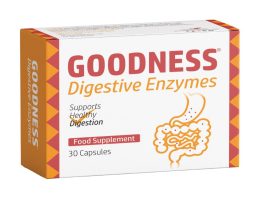 Goodness Digestive Enzymes$ 29.95